


Millions of Americans turn to a daily movement practice to improve their physical and mental health well-being. A structured pilates workout offers an effective way to build functional core strength without stressing your vulnerable joints. This low-impact exercise method focuses strictly on controlled movements, proper physical alignment, and synchronized deep breathing patterns.
Developed nearly a century ago by Joseph Pilates, this discipline originally helped rehabilitate injured dancers in New York City. Today, medical professionals widely recognize the practice for its profound ability to improve posture, flexibility, and core strength. Whether you visit a specialized studio or follow an at-home pilates workout, the fundamental principles remain exactly the same.
Before starting any new exercise routine, you should consult your primary doctor about your specific health conditions. Many licensed physical therapists recommend this method because it adapts easily to accommodate different injuries and fitness levels. Let us examine how you can effectively integrate these beneficial pilates exercises into your regular weekly schedule.
Research consistently demonstrates that regular physical activity yields positive effects on human physiology and overall mental health. When you practice pilates, your central nervous system communicates effectively with your deep stabilizing core muscles during a comprehensive body workout. This vital mind-body connection improves your overall body awareness while significantly reducing the risk of common daily injuries.
Studies published in peer-reviewed sports medicine journals highlight the numerous health benefits associated with a consistent mindful movement practice. Participants often experience improved joint mobility, better spinal alignment, and significant reductions in chronic lower back pain. Furthermore, engaging your abdominal muscles regularly helps support healthy digestion and improves your overall daily respiratory capacity.
While many people focus entirely on cardiovascular exercise for weight management, resistance training plays an equally important role. Building lean muscle mass increases your resting metabolic rate, which ultimately supports long-term sustainable weight loss. A medically reviewed study recently confirmed that combining resistance work with proper daily nutrition yields the best physical outcomes.
- Mind-body connection improves physical coordination and drastically reduces your daily injury risk.
- Consistent practice alleviates chronic back pain while improving overall spinal alignment and mobility.
- Resistance training builds lean muscle mass to support sustainable long-term weight management goals.
Preparing for Your At-Home Pilates Workout Routine
Setting up a dedicated exercise space helps establish a consistent routine for your full-body at-home pilates workout. You do not need expensive studio equipment to achieve meaningful results from your daily full-body workout sessions. Your own body weight provides more than enough resistance to challenge your muscles during the initial learning phases.
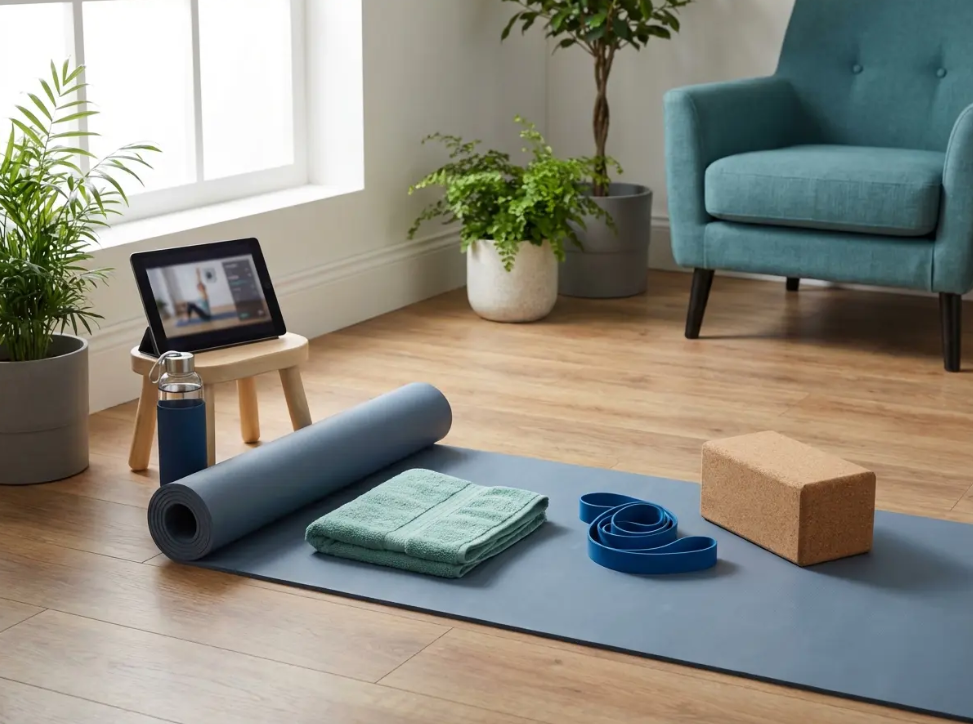
To begin your full-body at-home pilates practice, you simply need a comfortable surface and minimal household distractions. Roll out a thick yoga mat to protect your delicate spine during rolling movements and seated exercises. You might also want to keep a few resistance bands nearby to modify specific arm and leg movements.
Many beginners find it helpful to follow along with a high-quality instructional workout video on their television. If you stream a fitness class, clear the area so you can easily view the main content. This preparation helps you maintain proper physical form during your full-body at-home pilates session without constantly stopping to adjust your position.
Focus entirely on your breathing patterns before attempting to master the complex physical movements. Proper oxygen flow engages your deep abdominal muscles and protects your lower spine from unnecessary physical strain.
Essential Core Movements and Pilates Exercises
Building a strong physical foundation requires mastering a few fundamental core exercises before progressing to more advanced movements. Every highly effective routine targets the deep abdominal muscles that support your spine and pelvis during daily activities. These foundational pilates exercises train your body to stabilize the center while successfully moving your limbs completely independently.
For most beginner movements, you will need to lie face up on your mat with a neutral spine. This foundational posture serves as the primary starting position for dozens of different traditional floor mat variations. You must learn to keep your lower back stable rather than pressing it forcefully into the hard floor.
The Hundred is a classic historical movement that rapidly elevates your heart rate and stimulates peripheral blood circulation. You will hold your legs straight at a specific 45 degree angle while pumping your arms vigorously by your sides. This demanding pilates exercise forces you to coordinate your breathing with rapid physical exertion for a complete cardiovascular challenge.
How to Perform the Basic Pilates Exercise Sequence
1. Set Your Starting Position
Lie face up on your mat with your arms resting comfortably by your sides. Take three deep breaths to center your focus and prepare your muscles for the upcoming physical work.
2. Lift into Table-Top Position
Raise your legs into a standard table-top position with your shins parallel to the ceiling above you. Keep your knees bent precisely over your hips to maintain optimal tension in your lower abdomen.
3. Execute the Leg Stretch Movement
Extend one leg forward while pulling the opposite knee gently to your chest. This basic leg stretch increases hip flexibility while challenging your midsection to remain completely motionless throughout.
Advanced Upper Body Stability and Pilates Push-Up
Once you master the basic supine movements, you can introduce specific exercises that target your upper body shoulders and chest. A comprehensive fitness routine requires you to challenge your upper body strength against the constant pull of gravity. Moving from a seated position to a full weight-bearing posture changes how your muscles must react and stabilize.
Transitioning onto your hands and knees into a table-top position introduces a completely new layer of difficulty to any standard pilates exercise. When you assume a quadruped or tabletop position, your core must work against gravity to prevent your spine from sagging. This challenging orientation forces you to engage your stabilizing core muscles constantly throughout the entire sequence of physical movements.
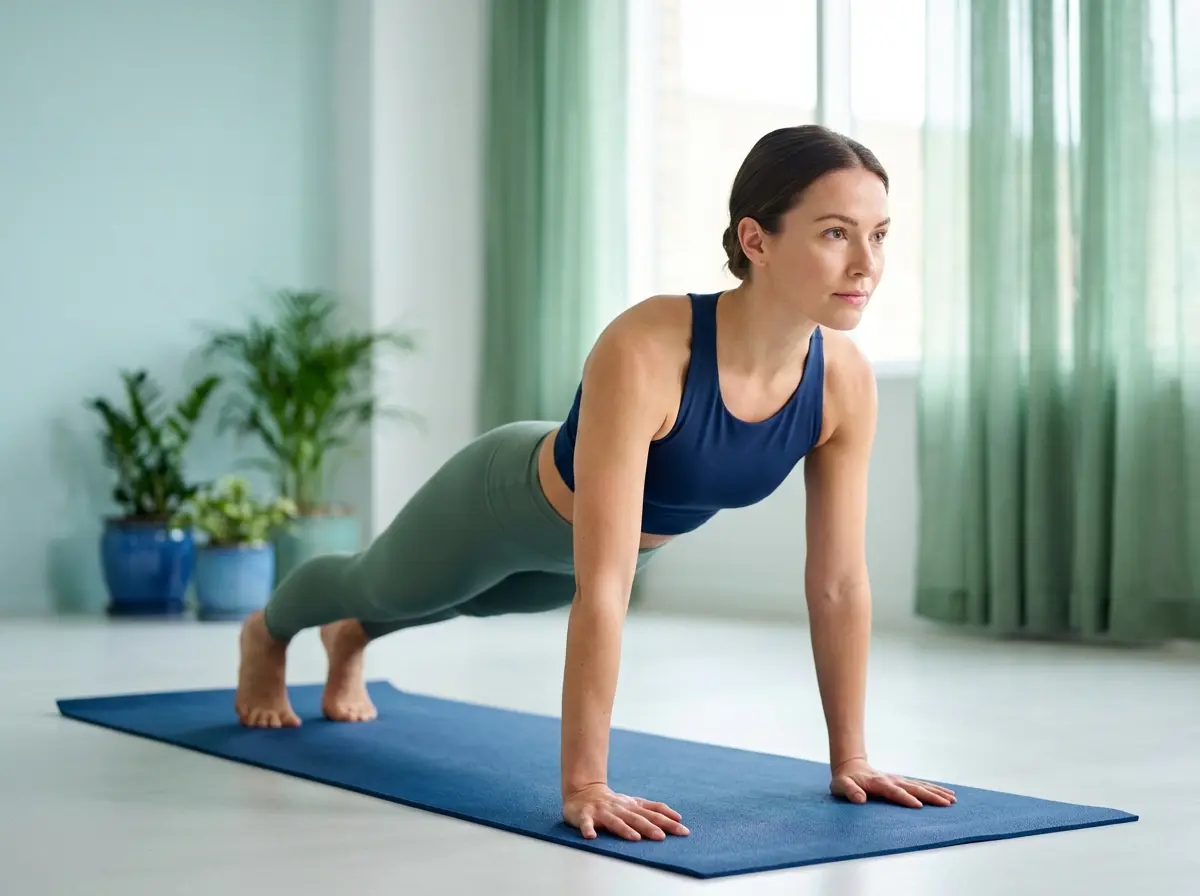
The traditional pilates push-up provides an excellent physical assessment of your overall upper body control and muscular strength. You begin this movement standing, articulate your spine forward, and slowly walk your hands out into a high plank. Maintaining a rigid plank position with your abs tight guarantees that you protect your vulnerable lower back during the descent.
Never sacrifice proper form simply to complete more repetitions during your daily practice. Performing five perfect repetitions yields better physical results than completing twenty repetitions with sloppy or potentially dangerous technique.
Building Leg Strength with a Pilates Workout
Strong legs provide essential structural support for your daily activities, from walking upstairs to lifting heavy household objects. When you practice a pilates workout regularly, you develop long, lean leg muscles rather than building unnecessary bulky muscle mass. The specific movements emphasize eccentric muscle contractions, which elongate the muscle fibers while simultaneously building highly functional strength.
Side-lying leg series are highly effective for targeting the outer thighs and stabilizing your important posterior gluteal muscles. You will rest your head comfortably on your left hand while keeping your hips stacked perfectly on top of each other. Extending your legs straight out creates a long physical lever that makes the targeted movement significantly more challenging.
To perform the side kick, lift your left leg slightly and sweep it smoothly forward and backward. Focus on keeping your left foot firmly anchored to the floor to maintain your overall physical balance. These targeted leg stretch movements provide immense health benefits by stabilizing the hip joints and preventing common knee pain.
- Eccentric muscle contractions build lean functional strength without adding unnecessary bulk to your lower body.
- Side-lying exercises stabilize your hips and glutes to prevent standard overuse injuries in your knees.
- Maintaining pelvic stability during leg movements forces your core to work twice as hard.
Adapting Your Pilates Exercise Practice
Every individual brings a completely different physical background and specific mechanical limitations to their daily home exercise routine. A certified pilates instructor can help you modify challenging movements to accommodate past injuries or restricted joint mobility. Professional expert guidance prevents you from developing poor movement habits that could potentially lead to future physical complications.
While traditional mat work provides an excellent foundation, some practitioners prefer the support of specialized commercial studio equipment. A traditional reformer machine utilizes a complex system of springs and pulleys to provide variable resistance during your workout. The specialized machine can actually assist you through a difficult pilates exercise by safely supporting some of your body weight.
You do not need to spend an entire hour exercising to experience meaningful improvements in your physical health. A focused 20 minute workout can effectively target all major muscle groups if you transition smoothly between movements. Daily consistency matters far more than the total duration of any single exercise session you complete during the week.
Conclusion: Making a Pilates Workout Part of Daily Life
Establishing a consistent pilates workout habit requires daily patience, mental dedication, and a highly practical approach to your weekly schedule. Integrating these mindful movement patterns into your week will gradually transform exactly how your physical body feels and functions. You will likely notice significant improvements in your daily posture and overall energy levels within just a few short weeks.
Remember that genuine physical transformation happens slowly through regular repetition and a firm commitment to proper mechanical movement. Focus on mastering the fundamental techniques before attempting complicated physical variations that require advanced bodily strength and flexibility. If you want to explore more fitness strategies, you can read our comprehensive guide on building a sustainable home workout routine.


