



Achieving optimal fitness health wellness requires significantly more than a casual commitment to occasional weekend workouts or sporadic physical activity. True well-being integrates consistent physical activity with mindful healthy habits to build lasting physical and mental resilience. Scientific research demonstrates that individuals who prioritize healthy living experience profound improvements in both longevity and daily functional capacity.
We will examine the proven methods for transforming your physical health through strategic exercise and deliberate nutrition. Medical experts agree that a proactive approach to wellness prevents many chronic diseases from developing later in life. You can take control of your biological age by implementing an evidence-based exercise program into your daily schedule.
Understanding the connection between movement, diet, and recovery forms the basis of any successful fitness program. This comprehensive guide provides practical strategies to elevate your physical capabilities and sharpen your mental clarity. Let us explore the core components that drive sustainable changes in your body and your mind.
Establishing a solid baseline for your physical health starts with understanding how different physiological systems work together through regular exercise. Your heart, muscles, and mind rely on consistent physical activity to perform at their absolute peak capacity every day. When you exercise regularly, your body adapts by strengthening cardiovascular functions and improving overall metabolic efficiency for long-term vitality.
According to the Centers for Disease Control and Prevention, adults need substantial physical activity every week to maintain health. This standard includes both aerobic exercise and specific activities that build muscle mass for long-term functional independence. Consistent physical activity directly correlates with higher energy levels and much better sleep patterns throughout the week.
Many people notice that exercise helps clear their mind and stabilize their mood after a stressful day. The mental health benefits are just as profound as the physical transformations you see in the mirror. Furthermore, physical activity can significantly improve your sex life by boosting systemic circulation and personal confidence.
Weight Loss and Building a Sustainable Exercise Program
Creating an effective exercise program involves balancing different types of movements to prevent injuries and performance plateaus. You need a structured mix of aerobic activity to strengthen your heart and resistance training for your bones. Let us review how to structure a routine that targets every major muscle group systematically and safely while supporting weight loss.
How to Start Your Fitness Journey
Consult Your Medical Professional
Consult your health care provider before starting any rigorous new workout routine. Your care provider can help you identify any physical limitations or necessary modifications for your safety.
Define Your Fitness Goals
Determine whether you want to lose weight, gain strength, or improve your cardiovascular endurance. Clear fitness goals help you measure progress and stay motivated during challenging phases.
Schedule Your Training Sessions
Block out specific times for both strength training and cardiovascular workouts on your calendar. Treat these appointments with yourself seriously to build unshakeable consistency.
Working directly with a personal trainer can dramatically accelerate your progress by providing customized guidance and accountability. Professional personal training offers specific correctives for your form, which prevents severe injuries during heavy lifting sessions. A qualified personal trainer understands exactly how to manipulate volume and intensity to keep your body progressing forward through structured personal training.
If one-on-one sessions feel intimidating or cost-prohibitive, group fitness provides an excellent alternative with built-in community support. The energetic group fitness dynamic often pushes participants to work much harder than they would in total isolation. Furthermore, the highly structured environment removes the frustrating guesswork from planning your own circuit or cardio routine.
Major Muscle Groups: Targeting Muscle Groups for Functional Strength Training
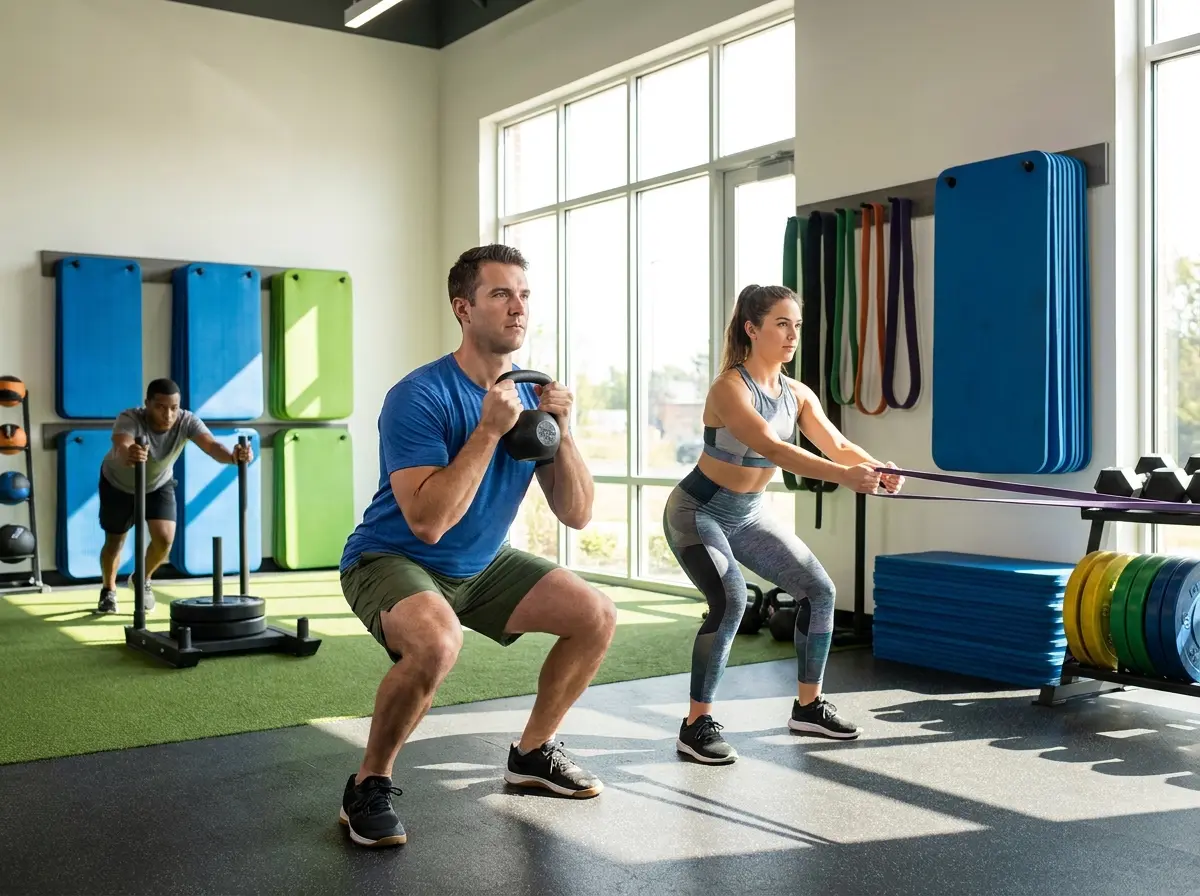
Focusing deliberately on specific muscle groups allows you to build balanced strength across your entire physical frame. You should train your legs, back, chest, shoulders, and core evenly to maintain proper posture and alignment. When you consistently neglect a major muscle group, you risk developing dangerous imbalances that lead to chronic pain.
Compound movements like barbell squats and deadlifts activate multiple major muscle groups simultaneously for maximum training efficiency. These demanding exercises trigger a strong hormonal response that helps you build muscle faster than isolated machine movements. Consistent strength training also increases your bone density, protecting you against conditions like osteoporosis as you age.
Proper recovery between these intense sessions dictates exactly how quickly your torn tissues repair and grow stronger. You must allow at least forty-eight hours of complete rest before aggressively training the same muscle groups again. This adequate recovery time prevents systemic overtraining and keeps your supportive joints feeling healthy, mobile, and pain-free.
High Blood Pressure: The Impact of Regular Exercise on Chronic Conditions
Medical professionals increasingly prescribe therapeutic movement as a primary intervention for numerous lifestyle-related diseases and chronic ailments. Regular exercise serves as a highly powerful defense against heart disease and metabolic syndrome in aging adults. Recent clinical trials consistently demonstrate that highly active individuals face significantly lower risks of developing these debilitating conditions.
If you currently struggle with high blood pressure, structured movement offers a highly effective natural way to manage it. Moderate aerobic exercise helps your stiff blood vessels expand and contract more efficiently, reducing overall arterial strain. Over time, this biological adaptation lowers high blood naturally without relying entirely on expensive pharmaceutical interventions.
Maintaining a healthy weight also plays a truly critical role in disease prevention and long-term joint preservation. Strategic weight loss reduces the daily mechanical stress on your vulnerable knees and hips during routine activities. When you lose weight through sustainable lifestyle methods, you drastically decrease widespread systemic inflammation throughout your entire body.
- Regular exercise dramatically reduces the risk of developing heart disease and metabolic syndrome.
- Moderate aerobic activity serves as a proven natural intervention for managing high blood pressure.
- Maintaining a healthy weight decreases joint stress and widespread systemic inflammation.
Healthy Eating and Healthy Habits for Lasting Results
Your visible physical transformations rely heavily on the nutritional fuel you provide your body each day. Healthy eating provides the absolutely necessary macronutrients to repair tissues after you stress them during heavy workouts. Without adequate dietary protein and complex carbohydrates, your muscles simply cannot recover and grow stronger for the next session.
Building sustainable healthy habits takes time, patience, and a willingness to intentionally adjust your environment for success. Focus on consuming whole foods instead of highly processed alternatives to keep your daily blood sugar stable. Consider reading professional resources on meal prep strategies to effectively streamline your weekly cooking routine.
Proper hydration and rigorous sleep hygiene complete the recovery equation for anyone actively pursuing ambitious fitness targets. Your body physically repairs torn muscle fibers and consolidates neurological learning during deep sleep cycles every single night. When you prioritize adequate rest alongside your workouts, you will feel good and perform much better consistently.
Track your daily protein intake to guarantee you consume enough nutrients to support optimal muscle recovery. Most active adults need roughly 0.7 to 1.0 grams of protein per pound of total body weight.
Privacy Policy: Evaluating Digital Health Resources and Main Content Safely
Finding highly reliable health information online requires sharp critical thinking and a basic understanding of modern website structures. Always look far past the flashy social media posts to find evidence-based articles backed by rigorous science. The main content of any reputable health website should clearly cite respected medical journals or official government databases.
Before trusting a digital platform with your personal medical data, review their documented privacy practices very thoroughly. Scroll all the way down to the footer menu to locate their formal privacy policy and terms of service. A truly legitimate health organization will also prominently display a nondiscrimination notice for their diverse global users.
Many reputable medical sites offer diverse accessibility options to serve a much broader audience effectively and safely. You might frequently see an “en espaã±ol” link to translate the complex medical text for Spanish-speaking family members. Use the website’s search search function to quickly locate specific professional resources or find a qualified local specialist.
Exercise Health: The Intersection of Mental Clarity and Physical Movement
Your brain functionally benefits from physical exertion just as much as your heart and cardiovascular system does. Current exercise health research shows that working out releases powerful endorphins that naturally combat daily stress and anxiety. These positive chemical changes in your brain create a strong feedback loop that encourages further physical activity.
People who exercise regularly report significantly higher levels of sharp focus and productivity at their demanding jobs. The increased blood flow delivers much more essential oxygen and vital energy levels to your brain tissues during the day. This fundamental biological mechanism explains exactly why a morning workout often leads to sharper cognitive performance later.
Do not severely underestimate the psychological resilience you build by pushing through a highly challenging workout session. Overcoming intense physical resistance translates directly to handling difficult mental and emotional obstacles in your daily life. The strict discipline required to maintain an exercise routine bleeds positively into every other aspect of your character.
Live Longer: Making Wellness a Lifelong Practice
Integrating all these fundamental elements creates a highly robust framework for living a vibrant and exceptionally active life. Watching your exercise improve your daily functioning and long-term health outcomes provides excellent motivation to stay consistent. People who fully commit to this comprehensive lifestyle approach generally live longer and experience far fewer medical complications.
Start small by slowly incorporating short walks or brief stretching routines into your existing busy daily schedule. As your physical confidence grows, you can gradually introduce heavier weights and more intense cardiovascular training sessions. Consistency matters far more than extreme intensity when you want to see permanent changes in your physique and health.
Remember that your fitness journey requires regular practical adjustments as your body ages and your personal circumstances change. Listen closely to your physical feedback and never hesitate to consult medical professionals when you hit a frustrating plateau. Your overall health remains your most valuable asset, highly deserving of your continuous attention and dedicated daily effort.


