


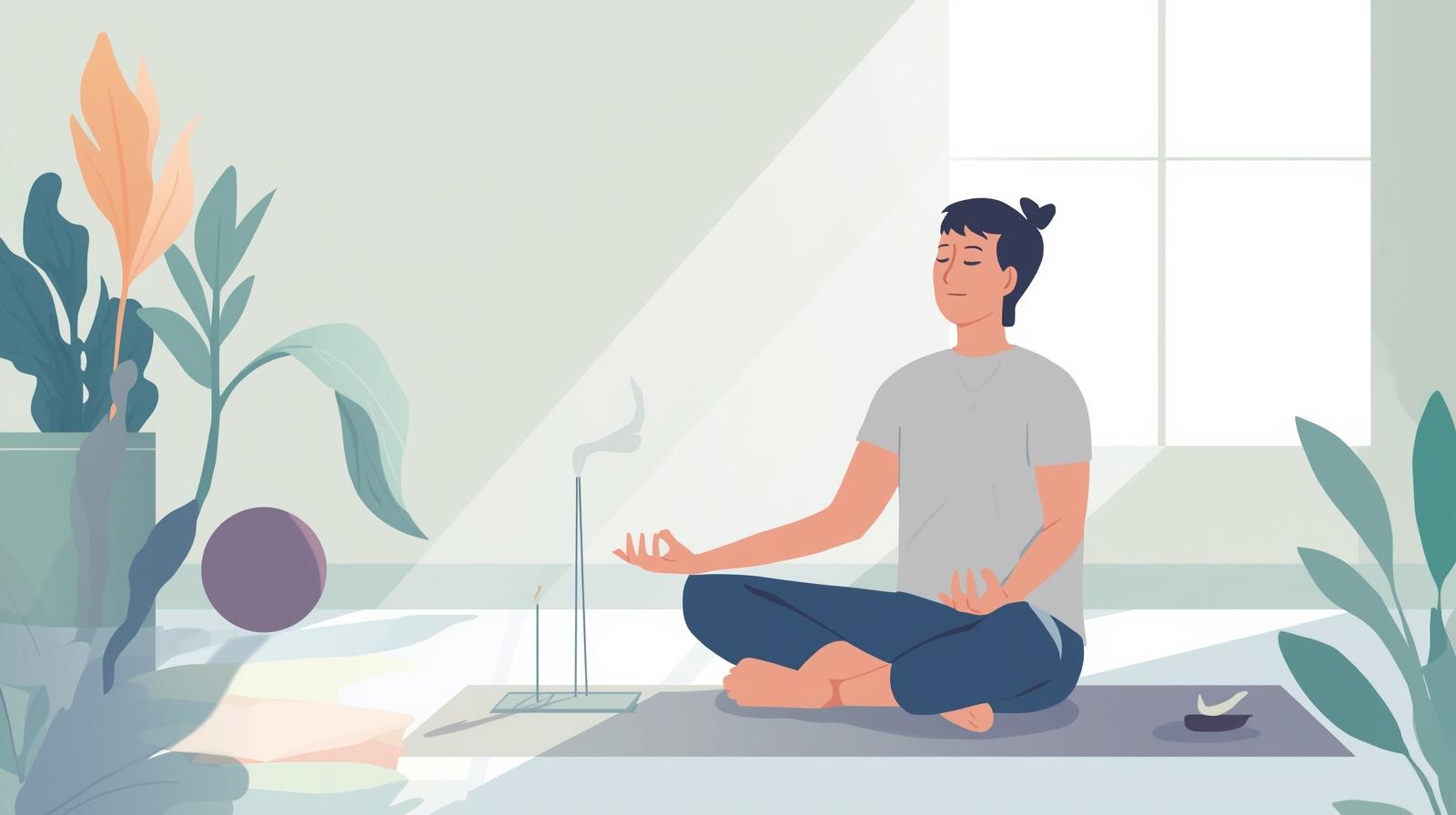
What if the entire point of meditating isn’t to clear your mind? If you’ve ever tried and “failed” because you couldn’t stop thinking, here’s some good news: you were never supposed to.
In practice, asking your mind to go blank is like asking your heart to stop beating. Your mind’s job is to think. The real skill—and one of the key benefits of mindfulness meditation—is simply learning to notice your thoughts without getting tangled up in them.
This simple shift from fighting to noticing is the entire secret. It means you can’t fail, and you can start right now without any pressure. Here is a three-minute exercise you can do immediately.
Your 3-Minute Guide to Your First Meditation Session
Forget intimidating postures and hour-long sessions; the goal here is to simply start. All you need to do is follow three basic meditation steps:
- Find a comfortable seat. A chair is perfect. Let your feet rest on the floor and your hands on your lap. Keep your back straight, but not stiff.
- Set a 3-minute timer. Use your phone or a kitchen timer. This frees you from watching the clock.
- Gently close your eyes and notice your breath.
Your only job for these three minutes is to feel the sensation of breathing. Think of your breath as a home base or an anchor for your attention. You don’t need to breathe in a special way—just notice the feeling of the air moving in and out of your body. When your attention drifts (and it will!), your task is simply to guide it back to that anchor.
It’s not a question of if your mind will wander, but when. You might start thinking about your to-do list, an email you need to send, or what’s for dinner. This is completely normal. But what happens when your mind feels less like a gentle stream and more like a raging waterfall?
“My Mind Is Racing!” — What to Do When You Can’t Stop Thinking
That feeling of a racing mind is the number one reason people think they’re “bad” at meditation. But you aren’t supposed to stop your thoughts. Trying to force your mind quiet is like trying to hold a beach ball underwater—it’s exhausting and bound to fail. The real work of meditation for stress relief isn’t emptying your mind, a common mistake, but changing your relationship with your thoughts.
So, what do you do if your mind wanders during meditation? Think of your attention as a playful puppy. When it runs off after a thought, don’t get frustrated. Simply notice it has wandered, and then gently guide it back. This two-step dance is the core of the practice: 1. Acknowledge the thought without judgment (“Ah, thinking”), and 2. Gently return your focus to your breath. That’s it. That’s the move.
Every time you notice your mind has drifted and you bring it back, you’ve just completed one full “rep” of the exercise. This act of returning is the meditation. It isn’t a sign of failure; it’s the entire point. You are training your brain to be less reactive and more focused, one gentle return at a time, building the muscle to navigate a busy life with more calm.
How Long Should I Meditate? (And How to Actually Stick With It)
When starting a daily meditation practice, the most common question is: “How long should I meditate each day?” The answer is likely shorter than you think. Forget aiming for 30 minutes. Instead, start with three. Or five. For a beginner, the most powerful choice you can make is to prioritize consistency over duration. Showing up for a few minutes every day builds the foundation of the habit far more effectively than one long, heroic session on a Sunday.
The secret to making that daily session stick isn’t just willpower; it’s linking it to a routine you already have. This simple trick is called “habit stacking.” Pick an existing, non-negotiable part of your day—like right after you brew your morning coffee or just before you brush your teeth at night. By piggybacking meditation onto that established habit, you remove the daily debate of when to do it. Simply find a comfortable corner for your new routine, whether it’s a chair in your living room or a quiet spot in your home office.
A five-minute practice that you do consistently is infinitely more valuable than a 30-minute one you dread and skip. As you begin to carve out these few minutes, a common question arises: is it better to meditate in silence or use a guide? Understanding the difference between guided and unguided meditation will help you decide.
Guided vs. Unguided Meditation: What’s Best for a Beginner?
Think of the choice between guided and unguided meditation like learning to drive. A guided meditation is like having a calm instructor in the passenger seat, offering gentle directions on where to focus your attention. An unguided meditation, on the other hand, is simply you and the quiet of your own mind. There’s no voice to follow; you are your own guide.
For nearly all beginners, starting with a guide is the most supportive path. When your mind inevitably wanders to your to-do list or a random memory, the instructor’s voice acts as a friendly anchor, gently reminding you to return to your breath. This removes the pressure of “Am I doing this right?” and makes the whole experience feel less intimidating and more achievable.
Getting started is easy, and you don’t need to pay for a subscription. High-quality apps like Insight Timer and Medito offer thousands of free guided meditations for beginners. Download one, find a short session, and press play.
The Real Goal of Meditation (And Your One-Week Challenge)
Before, you might have thought meditation meant forcing your mind to go silent—an impossible task. Now you know the real point of meditating is simply to notice your thoughts without judgment. You’ve unlocked the single most important secret to starting a daily practice: the goal isn’t emptiness, it’s awareness.
Your challenge: try it for just three minutes a day this week. Success isn’t a perfectly still mind; success is just noticing you’ve wandered and gently returning. Each time you do, you experience the core benefits of mindfulness meditation—creating a small, quiet space between you and your busy thoughts.


