


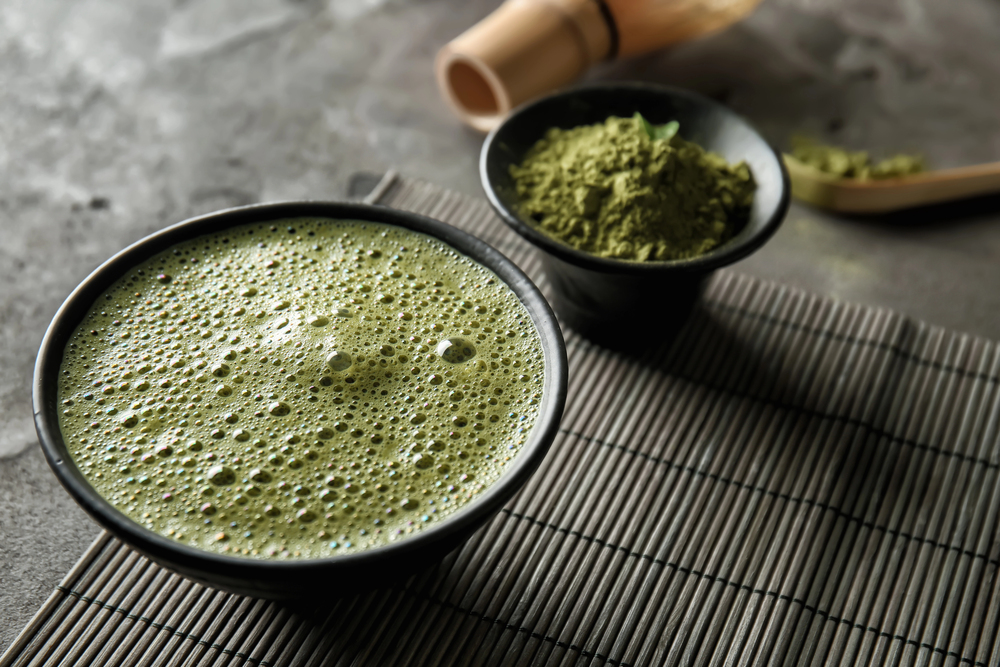
Matcha is everywhere right now. It is on coffee shop menus, in grocery store aisles, blended into smoothies, baked into croissants, and stirred into everything from overnight oats to cocktails. For a powdered green tea that has existed in Japan for nearly a thousand years, it has had a remarkably sudden moment in the Western world, and the timing is not entirely coincidental.
People are looking for something that works like coffee but does not punish them for it. Matcha, it turns out, has a compelling case to make on that front, and the interest in it goes well beyond aesthetics.
What Matcha Actually Is
Matcha is not simply green tea in powder form, though that description is technically close. The distinction starts in the field.
Like green tea, matcha comes from the Camellia sinensis plant. The difference lies in how it is grown. Farmers shade the plants used for matcha for most of their growth period, which increases chlorophyll production, boosts the amino acid content, and gives the leaves a darker, more vibrant green color. After harvesting, producers remove the stems and veins and grind the remaining leaf material into a fine powder. That powder is matcha.
The significance of consuming the whole ground leaf, rather than steeping it and discarding the leaves as with regular green tea, is substantial. When dissolved in water, matcha delivers roughly three times more catechins, the key antioxidants, than steeped loose-leaf green tea. You are not just extracting compounds from the leaf. You are consuming the leaf entirely.
The Science Behind the Calm Focus
The reason matcha has captured the attention of people who want productive energy without the anxiety that can accompany a strong coffee is rooted in two compounds working together.
Matcha contains L-theanine, an amino acid that slows caffeine absorption. This often means fewer jitters and less stomach upset compared to coffee. The caffeine and L-theanine combination has been shown to help improve focus and attention in a way that feels different from the sharp spike and subsequent drop that many people associate with their morning cup.
L-theanine boosts the production of alpha waves in the brain. These alpha waves encourage relaxation and induce a state of mental clarity and alert calm, a mental state comparable to what some people experience during meditation or focused breathing. The caffeine provides the lift while the L-theanine prevents it from tipping into restlessness.
Matcha contains around 70 milligrams of caffeine per eight ounces, compared to roughly 90 milligrams in a standard cup of coffee. The difference in how that caffeine lands is largely due to L-theanine moderating its release, making the energy more sustained and less likely to produce the familiar crash.
What the Research Shows About the Health Benefits
Studies show matcha may support cardiovascular health, brain function, and possibly metabolism. The caffeine and L-theanine combination has been shown to improve focus and attention, and traditional uses of green tea include supporting digestion, regulating blood sugar, and supporting mental wellbeing.
The antioxidant picture is particularly noteworthy. Matcha contains four main antioxidants known as catechins, and of these, EGCG is the most powerful. Studies show matcha provides up to 137 times more EGCG than standard green tea, which is one reason it is consistently highlighted for its potential health benefits.
Clinical trials have shown that regular matcha consumption can reduce anxiety and physiological stress markers, improve reaction time, and enhance attention and memory, particularly under stress. The effect is attributed to the combined action of caffeine, L-theanine, and catechins, which together produce what researchers describe as calm alertness rather than a caffeine spike.
The honest caveat worth keeping in mind: some of the more ambitious claims around matcha and exercise performance or metabolism have not yet been confirmed by large-scale research. More studies are needed before matcha can be positioned as a direct performance or fat-loss aid. What the evidence does support is meaningful, even if it is not everything the marketing sometimes implies.
Matcha is also a rich source of vitamins A, C, E, K, and various B vitamins, as well as minerals including calcium, potassium, iron, magnesium, phosphorus, zinc, and selenium. These contribute to everything from immune support to bone health, making matcha a nutritionally dense addition to a daily routine rather than simply a trendy drink.
Ceremonial vs Culinary Grade: What the Labels Actually Mean
Walk into any store selling matcha and you will encounter these two terms. The distinction matters, though not always in the way it is marketed.
Ceremonial grade matcha is made from the youngest, most carefully selected first-flush tea leaves and is designed to be whisked with water and consumed on its own. Culinary grade matcha uses slightly more mature leaves and is formulated for cooking, baking, and blending into lattes and smoothies.
High-quality matcha yields a refined, balanced, and smooth flavor with reduced bitterness. Lower quality matcha displays coarser, starker flavors that are best enjoyed when sweetened or mixed with milk. If the matcha you are drinking straight tastes overwhelmingly bitter even when prepared correctly, it is likely either culinary grade being mislabeled or a product of lower overall quality.
Both grades come from the same Camellia sinensis plant and contain similar levels of antioxidants, caffeine, and L-theanine. The main differences lie in taste, texture, and intended preparation method rather than nutritional composition. For everyday lattes, smoothies, or baked goods, culinary grade is the right and more economical choice. For drinking straight, ceremonial grade justifies the additional cost.
When evaluating quality beyond the label, consider the region of production. Uji in Japan is often considered the birthplace of matcha and produces some of the most sought-after varieties due to its optimal growing conditions and advanced cultivation history. Origin matters, and a product that cannot tell you where it was grown is a reasonable thing to approach with some skepticism.
How to Prepare It Properly
Matcha is traditionally prepared using a bamboo whisk, a scoop, a sifter, and a bowl, with hot water heated to approximately 175 degrees Fahrenheit rather than boiling. Scoop roughly one teaspoon of matcha powder into the sifter and sift it into the bowl to eliminate clumps, add a small amount of hot water, whisk until smooth, then add up to six ounces of water and whisk until frothy.
The temperature detail is important. Never use boiling water with quality matcha, as it scorches the delicate compounds and creates bitterness that has nothing to do with the matcha itself and everything to do with the preparation.
For lattes, the same sifting and whisking process applies before adding steamed milk. The sifting step is consistently skipped and consistently responsible for the gritty texture people sometimes complain about.
How Much Is Reasonable
One cup of matcha, using about one teaspoon of powder, contains roughly 60 to 70 milligrams of caffeine. For most adults, up to 400 milligrams of caffeine per day is generally considered safe, though tolerance varies. One to two cups of matcha per day is considered a reasonable and safe amount for most people.
If you are sensitive to caffeine, drinking matcha later in the day is worth reconsidering. Too much caffeine, regardless of the source, can lead to elevated blood pressure, anxiety, disrupted sleep, nausea, or headaches. Matcha is gentler in delivery than coffee for most people, but that does not mean the caffeine content is negligible.
The Bottom Line
Matcha powdered tea is one of the more substantiated wellness products in an otherwise crowded and frequently overpromised category. The energy it provides is real, the cognitive support is backed by genuine research, and the antioxidant density is meaningful. It also happens to taste good when prepared well, which is not always something you can say about things that are good for you.
The global shortage of high-quality matcha that began affecting markets in recent years is a testament to how far and fast the demand has grown. If you have not yet tried it in its proper form, whisked with water at the right temperature from a quality source, it is worth doing before you judge it by the version you stirred into a smoothie from a dusty tin in the back of a cabinet.


