


Fine diamond jewelry represents a massive global market, with United States consumers accounting for more than half of all worldwide demand. Financial analysts currently value the domestic diamond market at roughly forty-seven billion dollars annually, reflecting a robust and growing consumer interest. Buyers constantly look for clear, objective market data to make highly informed and financially secure purchasing decisions regarding their luxury acquisitions.
Understanding the intrinsic value of these precious stones requires looking far past the polished retail marketing campaigns often seen today. You must carefully evaluate historical market trends, scientific grading reports, and the fundamental differences between various stone origins before buying. This comprehensive guide breaks down the critical elements of diamond jewelry ownership, quality evaluation, and long-term asset maintenance for consumers.
Professional jewelers and gemologists consistently rely on standardized grading systems to accurately evaluate fine diamond jewelry for their discerning clients. The Gemological Institute of America originally established the modern grading system of carat, cut, color, and clarity to ensure market consistency. These specific metrics provide a highly quantifiable baseline for pricing and technically assessing any precious stone found in the market.
Diamond cut quality arguably holds the most influence over a stone’s light return and overall visual brilliance in any setting. An excellently cut diamond reflects light internally from facet to facet before dispersing it brilliantly through the top crown. Poorly cut stones leak light directly through the bottom pavilion, resulting in a dull appearance regardless of high diamond clarity grades.
Carat weight dictates the physical mass of the stone, with the diamond price increasing exponentially as the weight goes up. A single two-carat diamond costs significantly more than two one-carat diamonds of the exact same quality and color grade. This massive price jump occurs because large, high-quality rough diamonds appear very rarely in natural geological formations across the globe.
- Cut quality dictates brilliance and should be your highest priority.
- Carat weight impacts price exponentially, not linearly.
- Standardized 4C grading provides a reliable baseline for price comparisons.
Selecting the Best Diamond Shapes and Light Performance in Diamond Jewelry
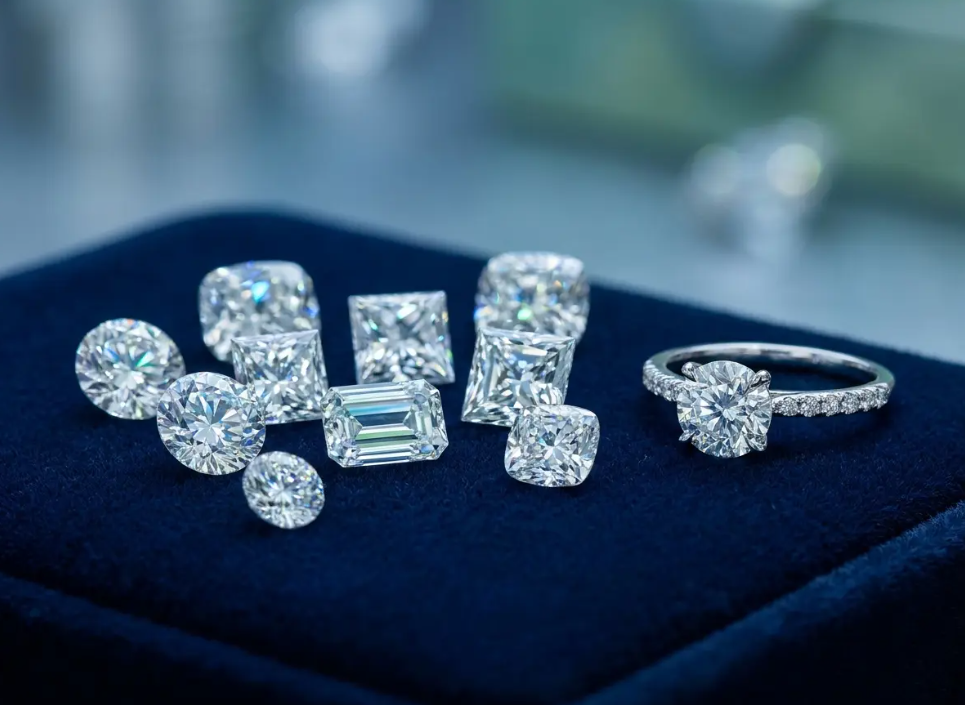
The physical silhouette of a stone drastically impacts how fine diamond jewelry reflects light and catches the observer’s eye. Round brilliant cuts remain the absolute most popular choice in the United States due to their superior optical performance. Gemologists engineered this specific pattern of fifty-seven facets to heavily maximize internal reflection and bright external fire for the wearer.
Popular Fancy Diamond Shapes and Their Unique Benefits
Fancy shapes offer distinct visual appeal and often cost significantly less per carat than traditional round brilliant stones. Cutters waste far less of the original rough diamond during the manufacturing process of these specific geometric shapes. Consequently, diamond cutters pass these major manufacturing savings directly to the wholesale and consumer retail markets for engagement rings.
- Oval Cut: Maximizes top surface area to appear much larger than round stones of identical carat weight.
- Emerald Cut: Features parallel step-cut facets that create distinct flashes of light rather than crushed-ice sparkle.
- Pear Shape: Combines the brilliant cutting style of a round stone with the elongated elegance of a marquise.
Elongated shapes like ovals and marquise cuts create an optical illusion that highly flatters the wearer’s hand and fingers. These stones physically cover more surface area on the finger, commanding immediate attention from across a room during social events. Buyers prioritizing visual size frequently choose these fancy shapes to maximize their available purchasing power and aesthetic impact.
Comparing Lab-Grown Versus Natural Diamond Jewelry Options
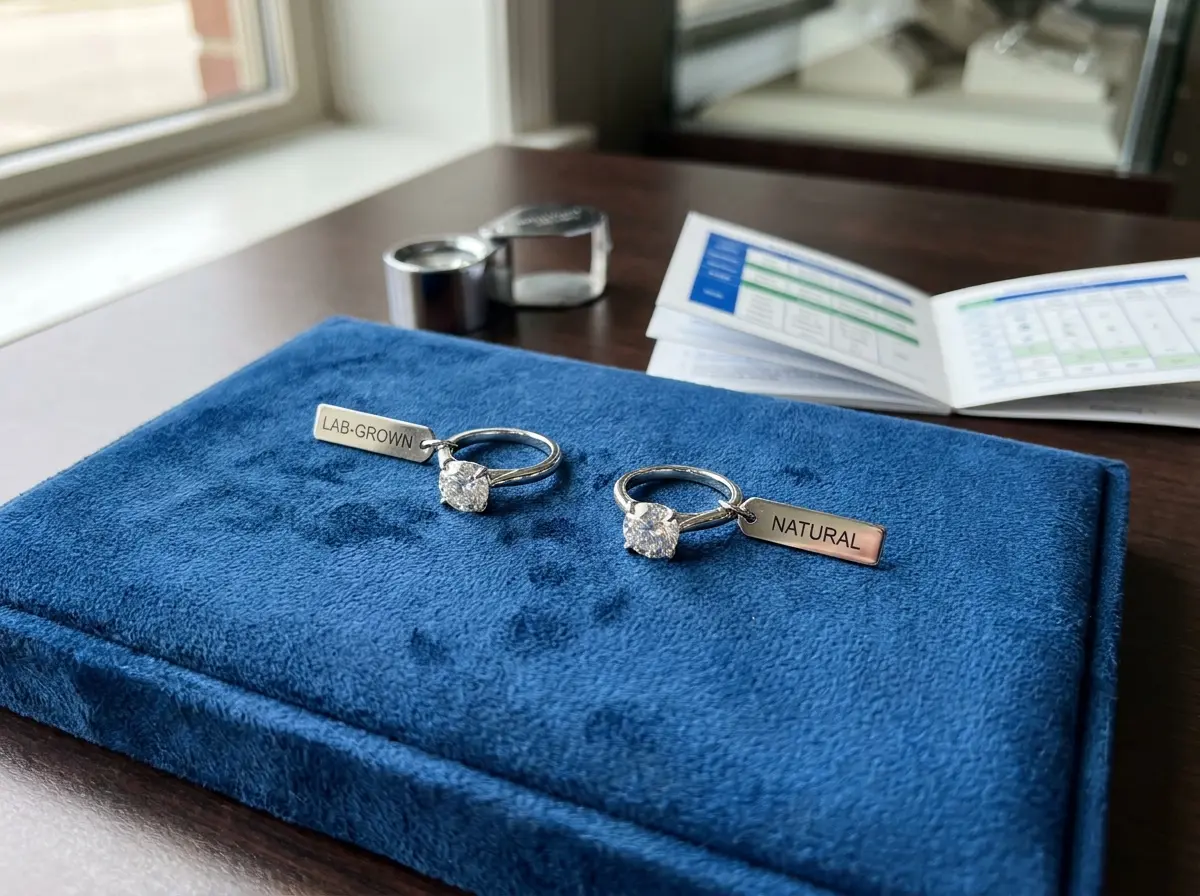
The introduction of laboratory-grown diamonds fundamentally disrupted the traditional diamond jewelry market over the last decade with new options. These synthetic stones share the exact chemical, physical, and optical properties of naturally mined diamonds found in the earth. However, they generally cost between sixty and eighty percent less than their natural counterparts of similar grade and size.
The Federal Trade Commission officially states that a diamond is a diamond regardless of its laboratory or natural origin. This landmark regulatory ruling forced traditional jewelry retailers to rapidly adapt their sales strategies and inventory models for modern consumers. Market data indicates lab-grown stones now account for nearly forty percent of all engagement ring sales in America.
Consumers must clearly understand the major difference in long-term value retention between these two distinct categories of stones. Natural stones historically retain a small portion of their value on the secondary jewelry resale market over several decades. Lab-grown prices continue to fall rapidly as manufacturing technology improves and global production volume scales up to meet demand.
Never purchase lab-grown diamond jewelry expecting it to hold financial value over time. Treat these beautiful stones purely as a highly affordable consumer purchase rather than an investment asset for your portfolio.
Analyzing Secondary Market Performance and Diamond Jewelry Investment Value
Many buyers mistakenly view standard retail diamond jewelry as a guaranteed financial investment for their future financial security. Retail markups typically range from one hundred to three hundred percent above the actual wholesale diamond costs for the jeweler. Consequently, an average consumer will recover only a tiny fraction of their initial purchase price during a resale event.
Investment-grade diamonds represent a completely different financial category from standard consumer jewelry found at local shopping malls. These exceptional stones feature incredibly rare colors, flawless clarity grades, and highly significant carat weights that attract wealthy collectors. Major auction houses like Sotheby’s and Christie’s regularly facilitate the sale of these multi-million dollar assets to global investors.
For typical consumers, you should view your purchase strictly as a luxury expense rather than an appreciating asset. Bain & Company’s diamond industry reports consistently show that standard commercial stones depreciate immediately after the initial purchase. Focus your buying strategy on personal enjoyment and aesthetic preference instead of chasing future financial returns from your jewelry.
Prioritizing Ethical Sourcing for Diamond Jewelry in the Modern Supply Chain
Consumer awareness regarding the origin of diamond jewelry forces the global industry to maintain strict ethical standards for sourcing. The Kimberley Process Certification Scheme actively attempts to eliminate the trade of conflict diamonds across international borders. This tracking system requires participating countries to certify that their rough stone exports do not fund violence or civil unrest.
Major United States retailers now provide detailed origin reports tracing a stone directly from the mine to the showroom. Tracking technology utilizes digital blockchain ledgers and microscopic laser inscriptions to verify the exact journey of individual GIA certified diamonds. This supply chain transparency gives buyers confidence that their purchases align with modern human rights expectations and ethical values.
Recycled diamonds present another highly ethical option for environmentally conscious consumers living in the United States and abroad. Jewelers remove these older stones from vintage pieces, repolish their facets, and set them into contemporary mountings for resale. This sustainable practice requires zero new mining activity and completely eliminates the environmental impact associated with traditional stone extraction.
How to Evaluate a High-Quality Diamond Jewelry Ring Purchase
Determine Your Origin Strategy
Decide whether you want a naturally mined stone or a laboratory-grown alternative based on your specific budget. This single decision will dramatically impact the size and quality of the stone you can afford for your ring.
Prioritize the Cut Grade
Allocate the largest portion of your budget to securing an Excellent or Ideal cut grade for maximum brilliance. A perfectly cut diamond masks lower color grades and hides small inclusions through intense light return and fire.
Verify Independent Certification
Demand to see the physical or digital grading report from a respected independent gemological laboratory like the GIA. Compare the laser inscription on the diamond’s girdle to the certificate number using a jeweler’s loupe for verification.
GIA Standards: Diamond Jewelry Certification and Appraisal Standards in the US
Objective certification remains the absolute most critical component of buying diamond jewelry safely and securely in today’s market. You should never purchase a significant stone based solely on a retail jeweler’s in-house grading assessment or verbal claims. Independent laboratories utilize advanced gemological equipment and strict protocols to grade precious stones without any financial bias or conflict.
The Gemological Institute of America (GIA) provides the most respected and trusted grading reports in the global industry. Their detailed certificates map every internal inclusion, specify the exact measurements, and confirm the stone’s origin for the buyer. The American Gem Society also offers highly reputable grading, particularly regarding strict cut performance metrics and light performance analysis.
Appraisals serve a completely different financial function than standard gemological grading reports and laboratory certificates provided at purchase. An appraisal assigns a specific retail replacement dollar value to the diamond jewelry for insurance purposes and coverage. These documents typically inflate the value slightly to protect the consumer against future market price increases and inflation.
- Always insist on GIA or AGS independent grading reports.
- Store-issued certificates often inflate quality grades to justify higher prices.
- Appraisals are for insurance replacement, not for determining resale value.
Exploring Modern Diamond Jewelry Design Trends in the US Market
Consumer preferences in diamond jewelry constantly shift based on changing cultural influences and macroeconomic factors affecting the luxury market. Yellow gold settings recently experienced a massive resurgence after decades of platinum and white gold dominance in the industry. This specific metal choice often masks slight yellow tints in diamonds, allowing savvy buyers to save money on color grades.
Hidden halos and highly delicate pave bands currently dominate engagement ring designs across the country for modern brides and grooms. These intricate settings require precise and careful craftsmanship to hold small accent diamonds securely in place for daily wear. Buyers should inspect these settings carefully, as overly thin metal bands frequently warp or lose stones during normal daily activities.
You can explore our custom jewelry gallery to see excellent examples of these contemporary design elements and unique settings. Custom manufacturing allows modern buyers to mix vintage aesthetics with highly secure modern mounting features for their fine diamond jewelry. This strategic approach provides excellent structural durability while fully satisfying your specific stylistic preferences and personal design vision.
Essential Diamond Jewelry Maintenance and Professional Care Protocols
Protecting your financial investment requires strict adherence to proper cleaning and preventative maintenance schedules throughout the year. Daily wear exposes diamond jewelry to hand sanitizers, cosmetics, and natural skin oils that dull the stone’s appearance over time. These thick substances create a microscopic film over the facets, severely restricting the amount of light the stone reflects back.
You should clean your fine pieces weekly using warm water, mild dish soap, and a soft-bristled toothbrush for best results. Scrub very gently behind the center stone where the metal setting collects the highest concentration of daily dirt and debris. Rinse the jewelry thoroughly and dry it immediately with a lint-free microfiber cloth to prevent hard water spots from forming.
Professional gemological inspections remain a highly critical component of long-term jewelry ownership and asset security for high-value pieces. Master jewelers strongly recommend bringing your rings in every six months to check for loose prongs or bent metal components. Catching structural damage early prevents the catastrophic loss of an expensive center stone during normal daily activities or travel.
Making Strategic Diamond Jewelry Purchasing Decisions
Buying diamond jewelry demands a careful balance of objective market research and highly subjective personal preference for the wearer. You protect your financial interests by understanding the four Cs, demanding independent certification, and comparing prices across multiple reputable vendors. Educated buyers successfully master the retail environment by relying on hard data rather than emotional sales tactics used by retailers.
The rapid rise of synthetic diamonds offers unprecedented choices and accessible price points for modern consumers seeking luxury items. Whether you select a natural historical heirloom or a scientifically grown stone, the fundamental rules of quality assessment remain identical. Focus heavily on cut quality, demand total transparency, and purchase items that bring you genuine personal satisfaction and joy.


