


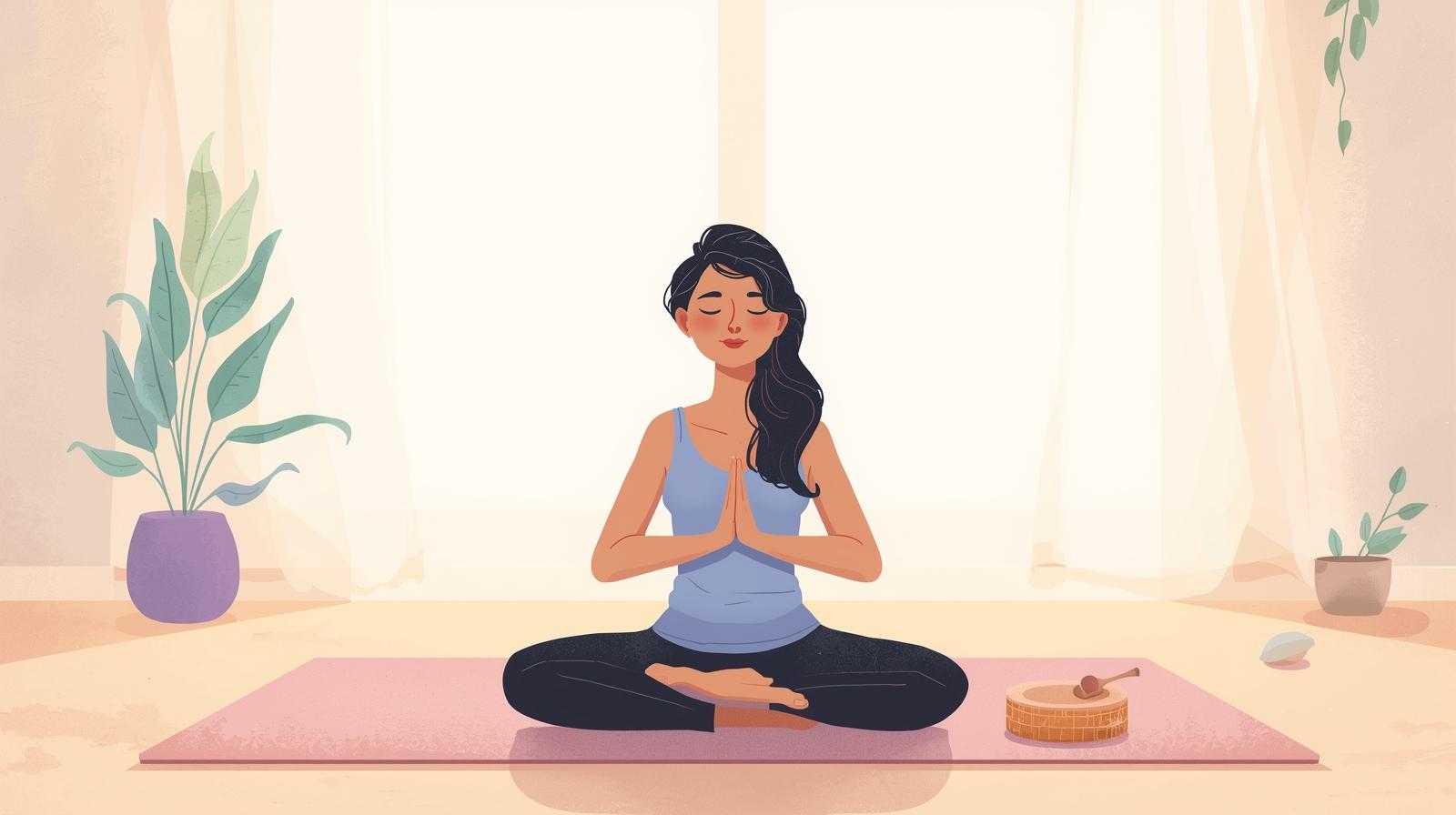
Think you need to be flexible enough to touch your toes to do yoga? You don’t. Yoga is not a flexibility test. It is a way to get to know your body, one breath at a time. If you can breathe, you already have everything you need to begin.
That tightness in your shoulders or stiffness in your back is often your body asking for gentle movement. This simple, beginner-friendly yoga routine is designed for practicing at home with no prior experience. In about ten minutes, you will learn how to connect breath with movement, feel more open, and recognize the difference between a healthy stretch and strain.
The One Rule of Yoga Breathing
When stress shows up, breathing usually becomes shallow and fast. Yoga encourages the opposite. Slow, steady breathing sends a clear signal to your nervous system that it is safe to relax. This is what transforms basic stretching into a calming practice.
The main guideline is simple: let your breath guide your movement. Inhale as you lengthen or lift your body. Exhale as you fold, round, or release. This rhythm keeps your body relaxed and prevents unnecessary tension.
Try it now. Sit comfortably and place one hand on your belly. Inhale through your nose and feel your belly expand. Exhale slowly and feel it soften. This gentle rise and fall is the breathing pattern you will use throughout the routine.
Warm Up with Cat and Cow
The spine often holds the most tension, so this is where the practice begins. Come onto your hands and knees, creating a tabletop shape. Place your hands under your shoulders and your knees under your hips. If your knees feel sensitive, use a folded towel or blanket for support.
Begin to move with your breath.
Inhale and let your belly drop toward the floor as your chest opens and your gaze lifts slightly.
Exhale and press the floor away as you round your spine and gently tuck your chin.
Move between these two shapes for five to eight slow rounds, following your own breathing rhythm. Focus on smooth, easy movement rather than depth. This gently warms the spine and releases built-up stiffness.
Downward Facing Dog Without Wrist Strain
From hands and knees, prepare for Downward Facing Dog. Spread your fingers wide and press evenly through your fingertips and knuckles to reduce pressure on your wrists. Imagine gently suctioning your palms into the mat.
Tuck your toes and lift your hips up and back. Bend your knees generously. Straight legs are not the goal. Length through the spine is what matters most. Think about sending your hips toward the ceiling rather than pushing your heels down.
Hold this position for three to five slow breaths. You should feel a full-body stretch that feels energizing, not painful. Adjust your knees or hands as needed to stay comfortable.
Rest and Reset in Child’s Pose
After an active stretch, your body benefits from rest. Lower your knees to the floor, bring your big toes together, and let your knees open comfortably. Sit your hips back toward your heels and fold forward, resting your forehead on the mat or a folded towel.
Your arms can stretch forward or relax alongside your body. Stay here for several slow breaths. This pose gently stretches the lower back and hips while calming the nervous system.
Think of Child’s Pose as your pause button. Any time you feel tired, strained, or short of breath, you can return here.
Your Simple Ten Minute Routine
You now have all the pieces for a complete beginner yoga sequence. Move slowly, follow your breath, and let the practice feel natural rather than forced.
A simple flow looks like this:
Cat and Cow for five to eight rounds
Downward Facing Dog for three to five breaths
Child’s Pose for five to ten breaths or longer if needed
This sequence works well in the morning to ease stiffness or in the evening to unwind after a long day.
What Comes Next
By practicing this routine, you have already started your yoga journey. There is no rush and no need for perfection. Consistency matters more than intensity.
Aim to practice two or three times a week. Each session is simply an opportunity to notice how your body feels and how your breath responds. That awareness is the heart of yoga, and you have already begun building it.


