


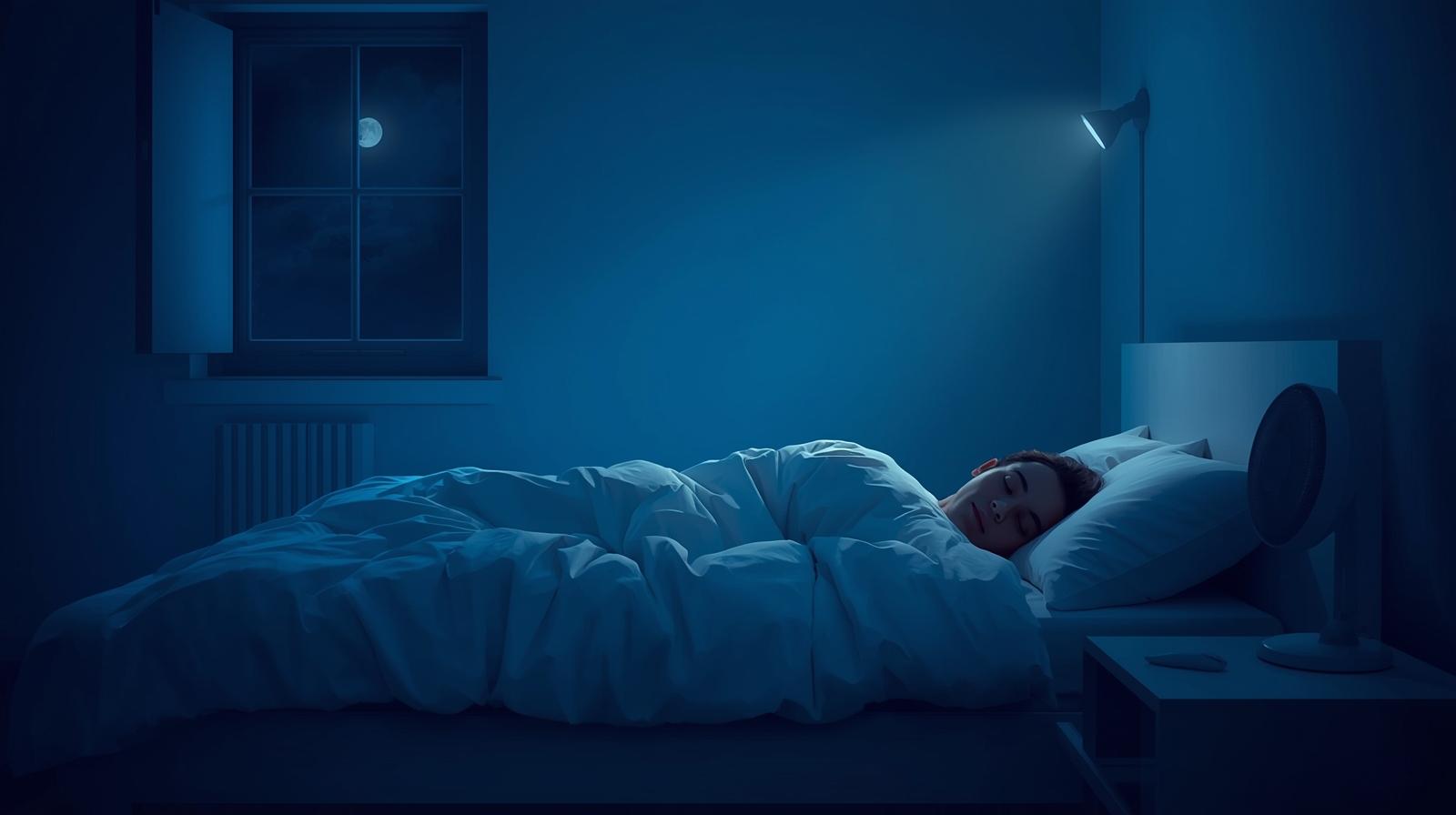
Is this a familiar story? You fall into bed exhausted, but an hour later you’re still tossing and turning, fighting with your blanket. What if the secret to winning that battle isn’t a new pillow, but a simple tweak to your thermostat?
The Science: Why a Cool Room Helps You Fall Asleep
Your body’s sleep schedule is governed by what scientists call your circadian rhythm—a 24-hour internal clock. Every evening, this internal clock begins a critical process: lowering your core body temperature to signal that it’s time for rest.
To successfully initiate sleep, your core temperature needs to fall by about two to three degrees. A cool room doesn’t force this process; it simply helps your body do its natural job more efficiently. Think of it like giving a runner a downhill path to the finish line instead of an uphill one. By setting your room to an optimal cool temperature, you are sending a clear message to your internal clock that it’s time to power down, making the entire process of falling asleep smoother.
How a Cooler Room Unlocks Deeper, More Restorative Sleep
Ever get a full eight hours but still wake up feeling like you’ve been running a marathon all night? The secret isn’t just about how long you sleep, but how well you sleep. The temperature of your room plays a surprisingly large role in determining whether you get the restorative rest your body craves.
Your sleep is made up of different stages, but the most physically restorative is “deep sleep.” This is the phase where your body does its most important repair work. Research shows that sleeping in a cooler environment helps you spend more time in this critical stage. When your room is too warm, your body struggles to stay cool, which can fragment your sleep and pull you out of this deeply restful state.
A cool room also acts as a powerful ally for your body’s natural sleep-wake cycle. As part of this rhythm, your brain releases a hormone called melatonin to signal that it’s time for bed. A cool environment helps this process along, allowing your body to produce and release melatonin more effectively. Your body was simply too busy trying to regulate its temperature to get the quality rest it needed. So, what temperature is on the wrong side of that line? For example, is 72 degrees too warm for sleeping?
Is 72 Degrees Too Warm for Sleeping? The Hidden Costs of a Toasty Room
For most adults, the short answer is yes—72 degrees (around 22°C) is likely a bit too warm for optimal sleep. While it might feel perfectly comfortable as you get under the covers, your body needs to drop its core temperature to enter and maintain the deepest stages of sleep. A room that starts out feeling “just right” can prevent your body from doing this essential work.
The real issue with a warmer room isn’t just discomfort; it’s something sleep scientists call sleep fragmentation. Your body has to work overtime to cool itself, causing you to shift positions, toss, and turn. Even if you don’t fully wake up, these mini-disruptions are enough to pull you out of restorative deep sleep, leaving you feeling groggy the next day. This is a common reason for waking up sweating at night, even in a room that doesn’t feel hot.
So how can you tell if your bedroom is quietly sabotaging your rest? Look for these classic signs:
- You find yourself tossing and turning frequently.
- You wake up feeling sweaty or clammy.
- You constantly kick your legs out from under the covers to cool down.
If this sounds familiar, your body is sending a clear signal. The good news is, you don’t need a fancy thermostat to fix it.
7 Practical Ways to Cool Your Room for Better Sleep (Even Without AC)
Achieving that ideal cool environment doesn’t require an expensive AC unit. In fact, one of the best tricks is a warm shower an hour before bed. It might sound counterintuitive, but the warm water brings blood to the surface of your skin. When you step out, that extra blood flow allows your body to radiate heat away quickly, lowering your core temperature and signaling that it’s time for sleep.
Beyond that, you can turn your bedroom into a cool sanctuary with a few simple adjustments. Most of these strategies are free and focus on preventing heat from building up in the first place.
Try one or more of these tips tonight:
- Use fans strategically. Create a cross-breeze by aiming one fan out a window and another into your room. For extra cooling, place a frozen water bottle in front of the fan blowing on you.
- Choose breathable bedding. Switch heavy comforters for lightweight blankets and opt for natural fibers like cotton or linen, which let heat escape.
- Go dark during the day. Keep blinds and curtains closed to block sunlight, which can raise your room’s temperature significantly.
- Sleep in lightweight pajamas (or none at all).
- Stay hydrated with a glass of cool water on your nightstand.
Finding the Right Sleep Temperature for Babies and Children
While adults thrive in a cooler room, the guidelines shift slightly when it comes to infants. For babies, the primary goal is safety, not just comfort. Pediatric experts recommend keeping a baby’s room at a consistent temperature between 68 and 72°F (20 to 22°C). This range is comfortable enough to promote sleep without introducing the dangerous risk of overheating.
Unlike adults, babies cannot regulate their own body temperature efficiently. They can get too hot much more easily, and studies have shown that overheating can increase the risk of Sudden Infant Death Syndrome (SIDS). Because of this, it’s far safer for a baby to be slightly cool than too warm. A stuffy, hot room is a significant and preventable hazard.
To check if your baby is comfortable, feel the back of their neck or their tummy. Their hands and feet will often feel cool to the touch, which is normal and not a reliable indicator of their core temperature. Dress them in a single layer of lightweight sleepwear, like a onesie or a sleep sack, and never use loose blankets in the crib.
Your 3-Step Action Plan for a Cooler, Deeper Sleep Tonight
That nightly battle with the thermostat is over. You now understand that the key to deeper, more restorative rest isn’t a mystery—it’s about helping your body’s internal clock do its job. Finding your optimal sleeping temperature is a direct path to significant sleep quality improvement, and you now have the map.
Ready for better sleep tonight? Here is a simple plan to start:
- Check your thermostat. Aim for below 70°F (21°C) as a starting point.
- Pick one new cooling trick from the list above to try.
- Pay attention to how you feel tomorrow morning.
You don’t need to find the “perfect” degree on your first try. The goal is simply progress. A small adjustment tonight is a powerful first step toward waking up feeling genuinely refreshed and ready for your day.


