


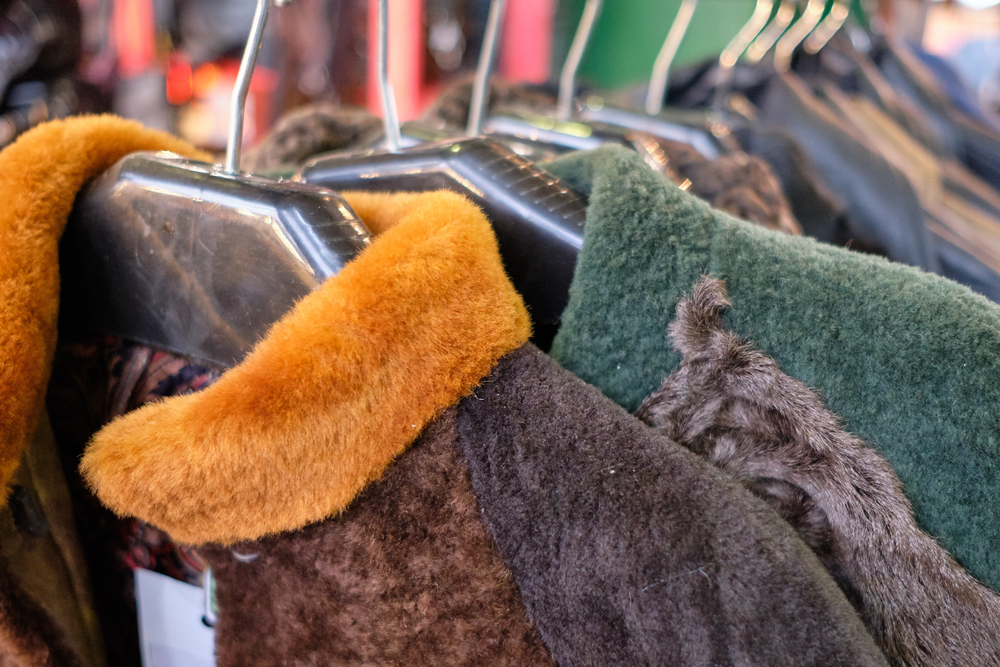
There is a particular feeling that experienced vintage thrifters know well. It is the moment you flip past something forgettable, then stop, flip back, and pull out a piece that is clearly different from everything around it. The weight of the fabric, the cut, the label, or simply a quality you cannot immediately name that tells you this one is worth trying on. That feeling is what keeps people going back, and it is entirely learnable.
Vintage thrifting has grown considerably beyond its original subcultural home. The secondhand and resale apparel market is one of the fastest growing segments in fashion, and the reasons people are drawn to it have multiplied alongside the options. Environmental awareness, the appeal of owning something nobody else has, frustration with the quality and disposability of current retail, and the genuine thrill of the hunt are all driving different people to the same racks. What separates a productive vintage thrifting trip from an overwhelming one is mostly knowledge.
The Difference Between Thrifting and Vintage Thrifting
These two things are related but not the same, and understanding the distinction changes what you are looking for and how you evaluate what you find.
Thrifting broadly means shopping for pre-owned items, which can include anything from last season’s fast fashion to decade-old casualwear to genuinely rare pieces. Vintage thrifting is more specific. Vintage clothing typically refers to garments that are at least twenty years old and that reflect the aesthetic and construction of their era. The value in vintage pieces is not just price. It is the combination of materials, construction quality, and design character that the mass market largely stopped producing at scale when manufacturing shifted toward cheaper, faster methods.
A 1970s wool blazer was made differently than a wool-blend blazer sold today. The seams are more generous, the fabric has more structural integrity, the lining is more substantial, and the cut was designed to last rather than to last one season. Learning to identify these qualities is what transforms a thrift store visit from a frustrating lottery into a skill-based activity with reliably interesting results.
How to Read a Piece Before You Even Try It On
The most efficient thrifters develop a tactile and visual shorthand that allows them to move quickly through a rack and pull only what is worth closer examination. This comes with practice, but the principles behind it can be learned immediately.
Start with the fabric. Before you look at the label or the cut, run your hands along the garment. Natural fibers, wool, cotton, silk, and linen, have a weight and texture that synthetic materials do not replicate convincingly. Good wool has a slight spring when compressed and then released. Quality cotton feels dense and crisp rather than thin and limp. Silk drapes fluidly and has a cool, smooth hand. Linen has a characteristic texture with slight irregularities that are part of the weave rather than a sign of wear. Polyester and acrylic, particularly older versions, often have a faint squeak when rubbed between fingers and a lighter, less substantial feel. This initial fabric assessment takes seconds and eliminates a large proportion of racks immediately.
Then look at the construction. Turn the garment inside out before you put it on. Generous seam allowances indicate the piece was made to last. French seams, which enclose the raw edges entirely, were common in well-made garments of an earlier era and are rarely used in modern mass production. Even stitching, quality lining, and well-finished hems are indicators that the manufacturer invested in the construction beyond what was strictly necessary to hold the piece together.
Hardware matters on outerwear and bags. Metal zippers, particularly YKK zippers on older pieces, solid metal buttons, and substantial buckles are signs of quality that have no equivalent in modern budget manufacturing. Plastic hardware that feels light or hollow is a reliable indicator of a garment not worth much attention.
Decoding Labels and Tags
Vintage labels are one of the most informative and most underutilized tools in a thrift store. Learning to read them quickly accelerates the process of separating genuinely vintage pieces from secondhand recent clothing considerably.
Country of origin is one of the most useful data points. Garments marked as made in the USA, Italy, France, Japan, or England carry a general credibility of craftsmanship that reflects the production standards of those regions during specific periods. A garment with a union label, identifiable by the small scalloped circle tag often sewn behind the main label, was made by unionized American workers and typically dates the piece to before the 1990s, when much domestic manufacturing relocated offshore.
Sewn-in labels rather than printed or iron-on labels indicate an older or higher-quality garment. Typography on the label itself can date the piece quite precisely if you develop a sense for how brand presentation changed across decades. Care instructions are also informative: the standardized machine-washing symbols we use today were not widely adopted until the 1970s, which means a garment with only text care instructions is likely pre-1970s, and one with no care label at all may be earlier still.
Do not let vintage sizing derail you. Sizing conventions have changed significantly over decades, and older garments run considerably smaller by modern labeling standards. The number on the tag is essentially irrelevant. What matters is the actual measurement of the garment, which you can either feel against your body in a try-on or estimate by holding it against yourself before committing to the changing room queue.
The Categories Most Worth Your Time
Not every section of a thrift store rewards vintage hunting equally. Experienced thrifters tend to prioritize certain categories because they consistently yield the best return on time invested.
Outerwear is arguably the most reliable category. A well-made coat or blazer from any decade between the 1950s and the 1990s was built to outlast decades of wear, and the construction quality of older outerwear is genuinely difficult to match in modern production at any price point below the very high end. Wool coats in particular age beautifully, and a cleaned and repaired vintage wool coat will outperform most modern equivalents in both warmth and longevity.
Denim is perennially valuable in a thrift store context. Older denim was cut differently, woven from a heavier, more durable cotton, and faded in ways that modern artificially distressed denim cannot authentically replicate. Straight-leg and relaxed-fit jeans from the 1980s and 1990s have been among the most sought-after vintage pieces for several years, partly because the silhouettes align with current fashion and partly because the quality of the raw material is simply better.
Knitwear, particularly in natural fibers, is another strong category. A cashmere or wool sweater that has survived decades of storage still has structural integrity that a modern equivalent at a similar secondhand price would not. Check for pilling, which is manageable with a fabric shaver, and for moth damage, which presents as small irregular holes and is generally not worth taking on.
Silk blouses, tailored trousers, and structured dresses reward careful searching. These pieces were expensive when new and were made to justify that expense in a way that modern fast fashion cannot.
What to Pass On
Part of developing good thrifting instincts is learning to walk away efficiently. The items not worth your time are as important to identify as the ones that are.
Underarm staining on light fabrics is almost always permanent and not worth the attempt to salvage. Strong, embedded odors, particularly anything musty, smoky, or chemical in nature, rarely respond fully to washing and will remain as a background presence in the garment. Cracked leather is structural deterioration that cannot be reversed. Visible moth damage beyond one or two small holes is a sign of a larger problem with the integrity of the fabric.
Loose buttons, small tears, minor pilling, and light surface staining are all genuinely worth taking on if the rest of the piece justifies it. The bar for repair should be proportional to the quality of what you are repairing.
Building Something Rather Than Just Accumulating
The trap that catches many enthusiastic thrifters is accumulating pieces that do not work together, each one exciting in isolation but collectively incoherent. The most functional vintage-thrifted wardrobes are built with the same intentionality as any other wardrobe, just with more patience and a higher ceiling for the quality available at low prices.
A useful discipline before buying anything is to identify at least three things you already own that the piece would work with. If you cannot do that immediately, the piece may be genuinely unusual and worth having, or it may be a distraction from building something usable. That judgment call gets easier with practice, and eventually the eye you develop for quality in the racks starts to inform the way you approach your wardrobe as a whole.
Vintage thrifting at its best is not just a cheaper way to shop. It is a different relationship with clothing entirely, one that prioritizes longevity, individuality, and craft over novelty. Those values tend to produce wardrobes that are more interesting, more dura


